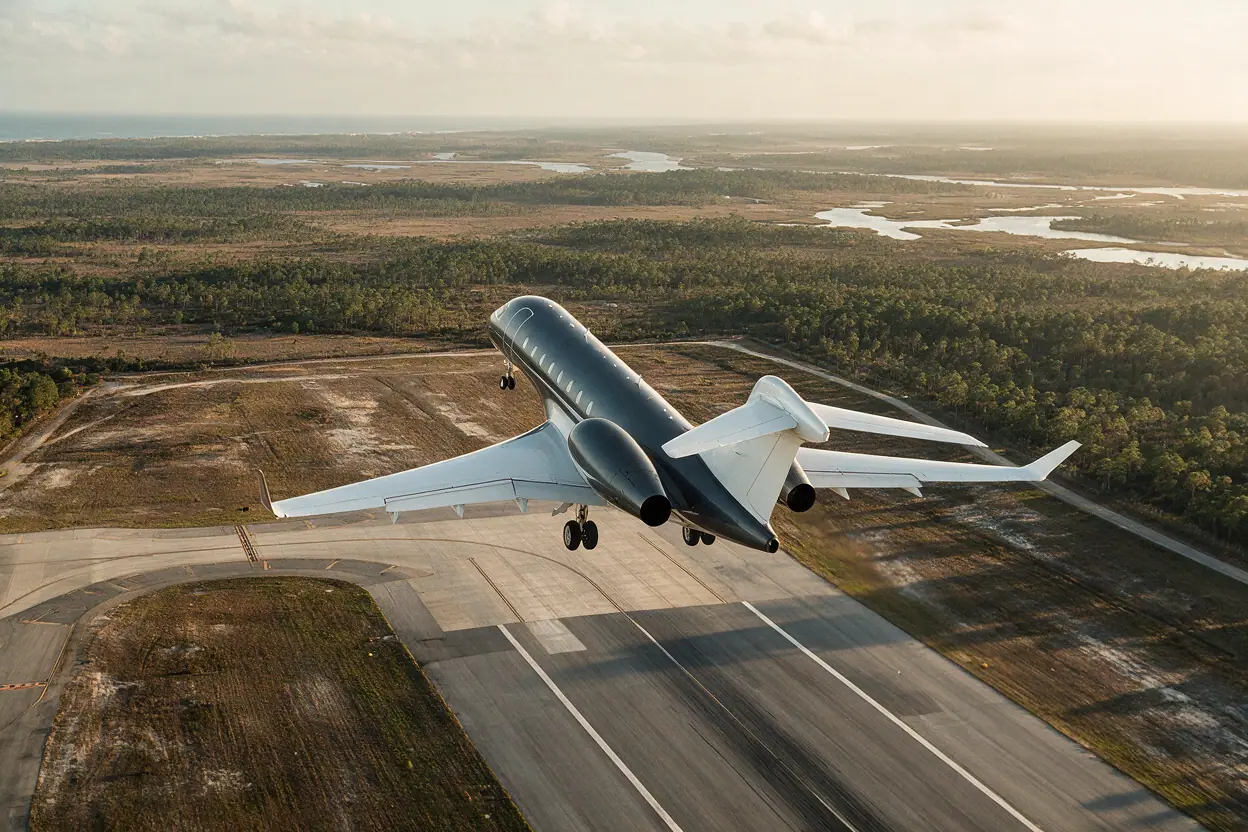
Private plane rental routes
Private plane rental routes pair city airports that airlines make slow. A light jet flies Los Angeles to Las Vegas in about forty-seven minutes for an estimated $4,000 to $6,000. This guide prices eight popular private jet routes.
- Main page
- Routes
A route is the unit that matters when you rent a plane by the flight hour. Distance sets the time aloft, the class of aircraft sets the hourly rate, and the airport pair at each end sets how much of the day disappears on the ground.
Airport choice is half the planning. At the New York end, Teterboro sits at nine feet of elevation with a 6,997 foot runway, which keeps light jets and midsize jets viable in summer heat. Van Nuys, at 802 feet with an 8,001 foot runway, does the same job for Los Angeles and fills the gap left by the airline terminals. Miami-Opa Locka Executive, Chicago Midway, Dallas Love Field and William P. Hobby in Houston all put the aircraft close to the city rather than an hour out.
Every price on this page is an estimate until a specific aircraft and crew are confirmed for your dates. Quotes also move with the number of flight hours, the airport and any repositioning the aircraft needs to reach your departure point. Treat the figures as a budget-setting tool, then compare two or three quotes on the same route and the same class.
Flights from Chicago, Dallas and Houston
Midway, Love Field and Hobby each give a private flight a short taxi to the runway instead of a long walk through a commercial concourse. Chicago to Miami covers 1,023 nautical miles in roughly two hours forty-eight minutes by light jet, for an estimate of $10,500 to $16,000. Chicago to Miami covers 1,023 nautical miles in about two hours forty-eight minutes with pricing that depends on the aircraft and the day. Dallas to Las Vegas spans 925 nautical miles and runs about two hours thirty-four minutes in a light jet, while an Atlanta to New York trip covers 643 nautical miles in one hour fifty-two minutes. Dallas to Las Vegas is 925 nautical miles and roughly two hours thirty-four minutes by light jet, priced near $9,500 to $15,000. If the passenger list grows past seven, then a midsize jet such as the Hawker 800XP seats eight without splitting the group. Density altitude matters at all three airports in summer. Love Field peaks near 3,500 feet and Hobby near 2,700 feet, so a turboprop carrying a full load may need a longer runway or a cooler departure window. Hobby reaches about 2,700 feet of density altitude at its hottest, so early departures fly better on warm Texas mornings. When the schedule allows, a departure before the afternoon heat gives a turboprop more margin.
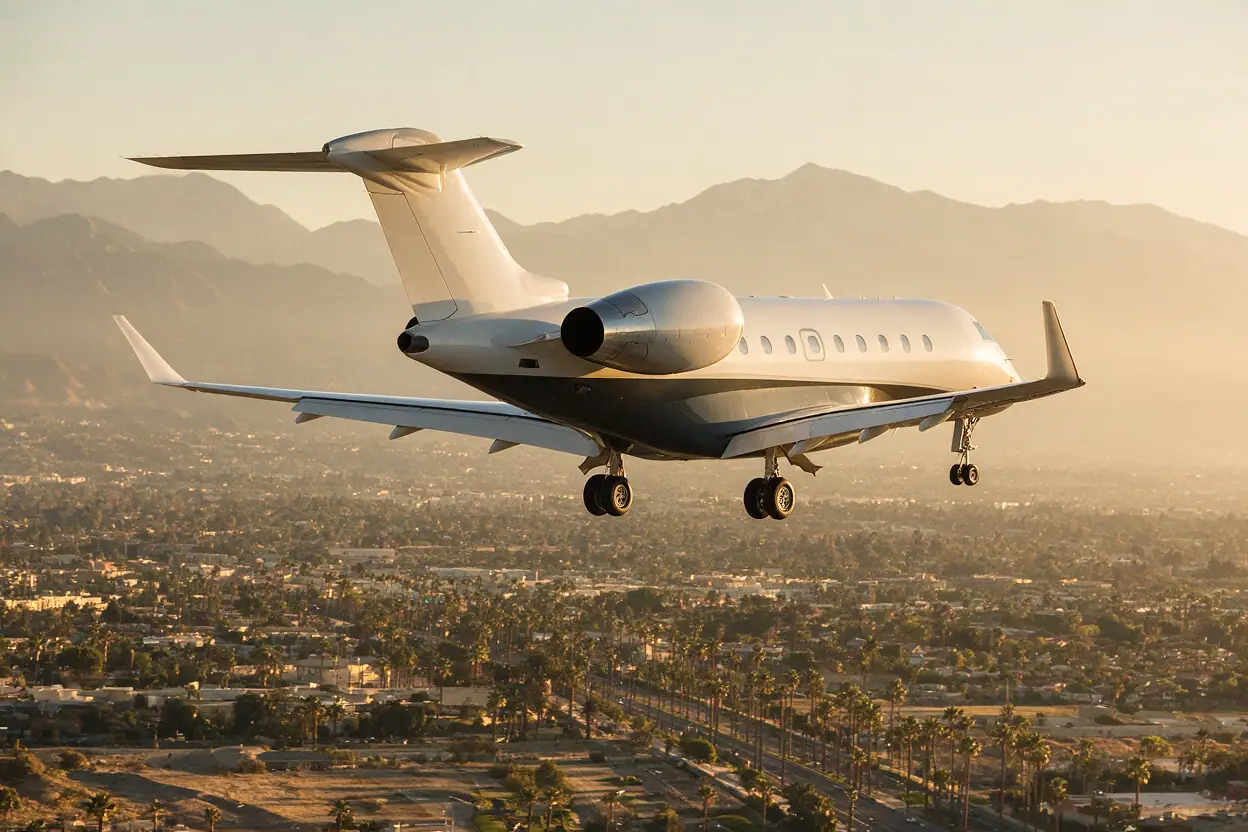
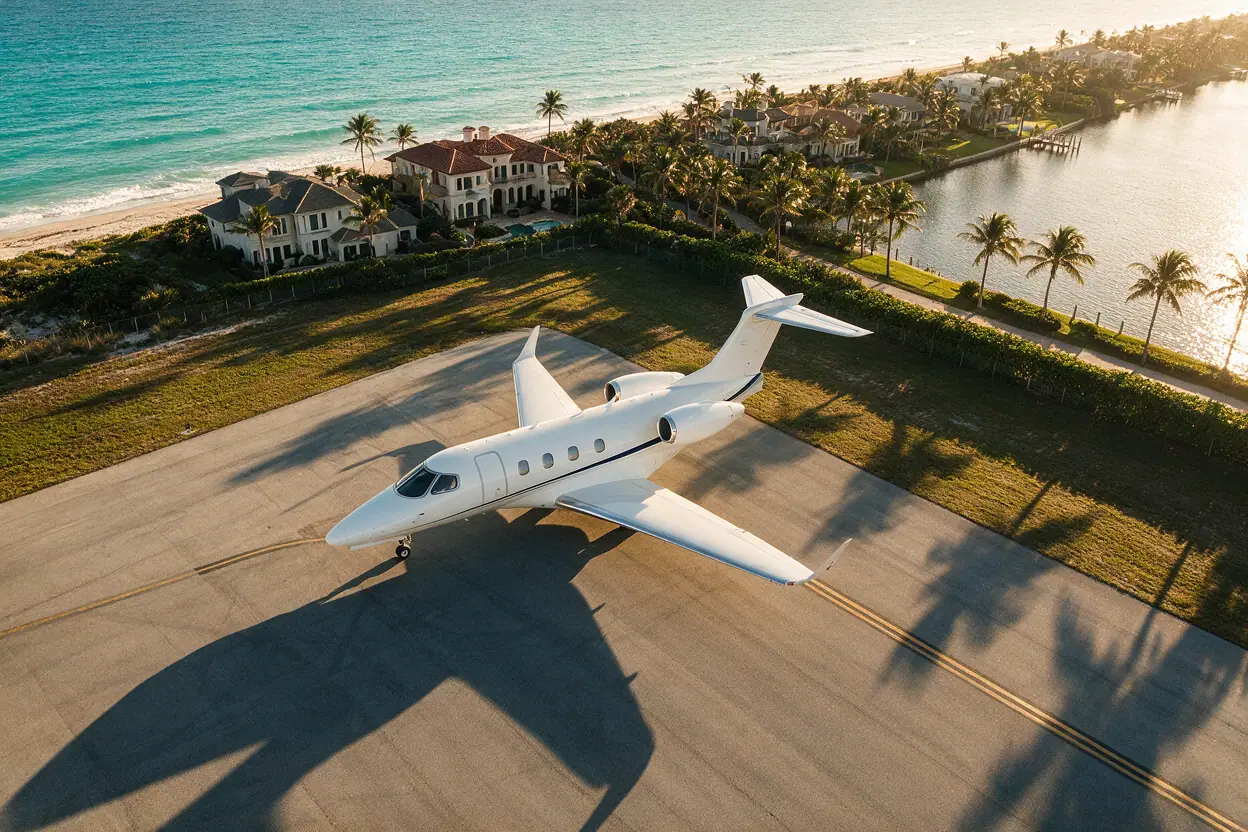
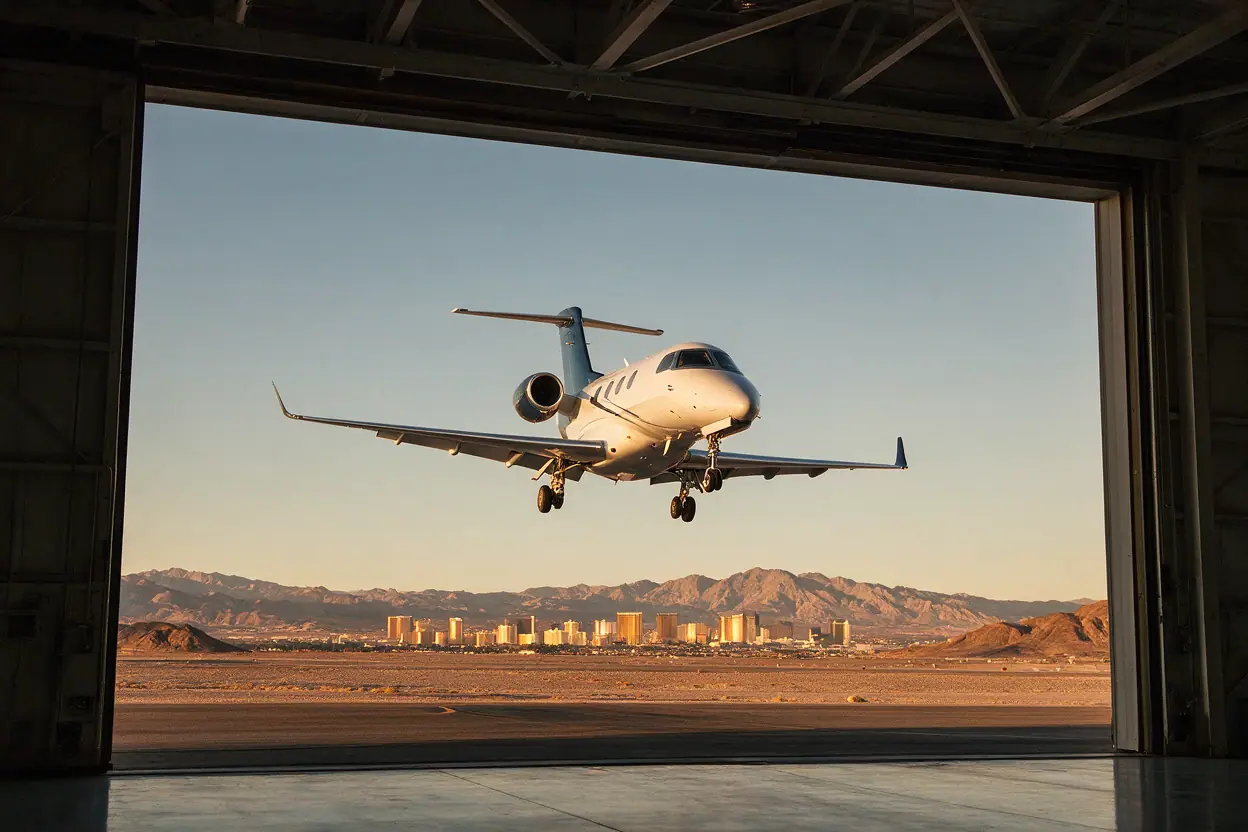
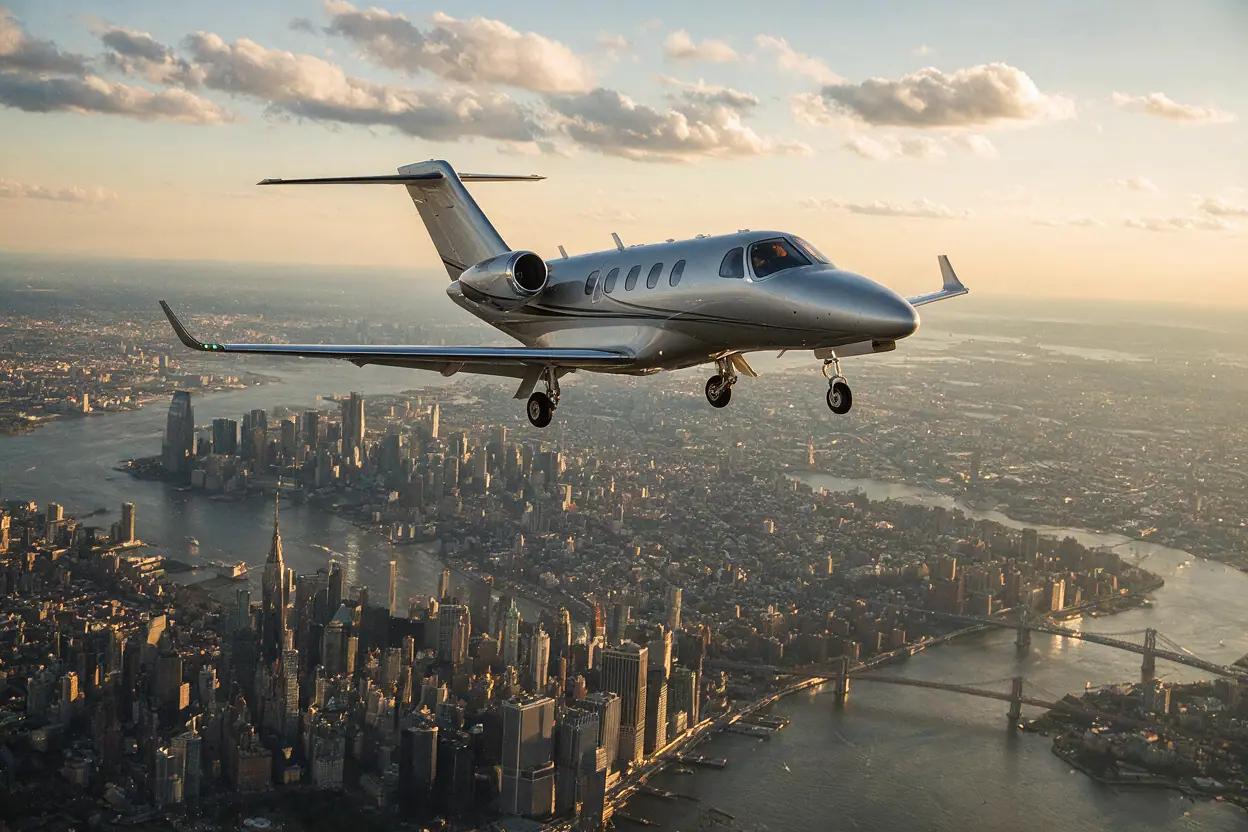
Private plane rental routes to NYC
Teterboro is the busiest inbound point for private flights into Manhattan, and its 6,997 foot runway handles light jets on all but the hottest afternoons. Peak density altitude there reaches about 2,300 feet, which shortens takeoff margins but rarely rules out a Citation CJ4 or Phenom 300E. Teterboro's 6,997 foot runway keeps most light jets viable even on the warmest July afternoons at nine feet of field elevation. On the West Coast, Van Nuys pairs an 8,001 foot runway with four FBOs, so arrivals rarely stack up the way they do at airline terminals. The airport reaches roughly 3,800 feet of density altitude in its hottest month, a figure worth checking before you book a small airplane with a full cabin. Van Nuys sits at 802 feet with an 8,001 foot runway, ample for light jets. Los Angeles to San Francisco runs 279 nautical miles in about fifty-nine minutes by light jet for an estimated $4,000 to $6,000. When a meeting ends mid-morning, a midday departure beats an afternoon at the terminal. City pairs such as Los Angeles to San Francisco show the value clearly, covering 279 nautical miles in under an hour once you are airborne. Los Angeles to San Francisco is a short hop at 279 nautical miles and about fifty-nine minutes for an estimated $4,000 to $6,000. If the passenger list stays at seven or fewer, then a light jet handles the trip without a fuel stop.
How these times and prices are built
Times begin with great-circle distance between the two airports, plus a 5 percent allowance for routing and air traffic, divided by a class cruise speed. Light jets are modeled at 430 knots. A flat 0.3 hour covers taxi, climb and descent, and the result rounds to the nearest minute. A one-hour minimum applies, which is why very short hops still price like an hour of flying.
Prices multiply the block hour by an hourly rate range for the class. Light jets run $3,800 to $5,800 per hour, midsize $5,200 to $7,800 and heavy $9,500 to $14,500, each subject to a one-hour minimum. Every figure is an estimate until an operator confirms the aircraft, crew and dates. If your route needs more range than a light jet offers, then compare a super-midsize jet or plan a fuel stop.
FAQ
How much does it usually cost to rent a private jet?
Midsize jets run $5,200 to $7,800 per hour and heavy jets $9,500 to $14,500. All figures are estimates until an operator confirms the aircraft.
Which private plane rental routes are shortest?
Los Angeles to Las Vegas is the shortest on this page at 199 nautical miles and about forty-seven minutes in a light jet, for an estimated $4,000 to $6,000. Los Angeles to San Francisco follows at 279 nautical miles and about fifty-nine minutes, priced the same way. The one-hour minimum means both bill close to one flight hour.
Can a light jet fly New York to Los Angeles without stopping?
Not with a full load. The route covers 2,129 nautical miles, which is within the 2,165 nautical mile range of the Citation CJ4 Gen2 but past the 2,010 nautical mile range of the Phenom 300E.
What do private plane rental routes cost on a per-flight basis for a group?
Prices are per flight, not per seat, so a full cabin spreads the cost. For example, New York to Miami is estimated at $10,000 to $15,000 in a light jet that seats up to seven, and Los Angeles to Las Vegas at $4,000 to $6,000. Larger groups may need a midsize jet at $5,200 to $7,800 per hour. Treat each figure as an estimate until confirmed.
How does weather affect private flights on these routes?
Summer heat raises density altitude, not distance. Dallas Love Field peaks near 3,500 feet, Van Nuys about 3,800 feet and Teterboro near 2,300 feet. Higher figures thin the air and lengthen takeoff runs, so a full-cabin light jet may need a cooler hour or a longer runway. Confirm the operator holds FAA Part 135 authority before you book.